

Home Gym Workout Plan for Women Over 40 — Weekly Training Template
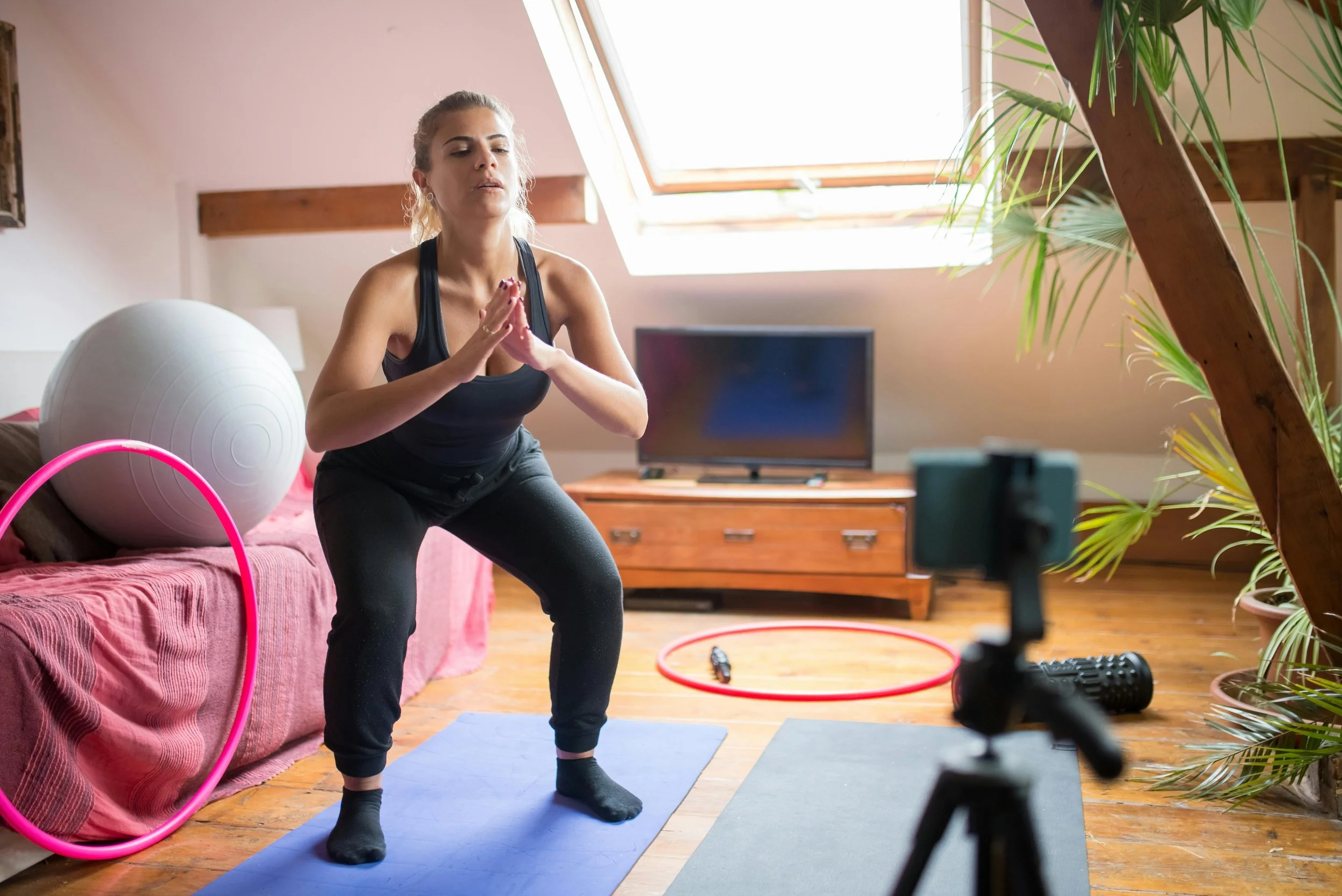
The typical approach to home gym workout programs goes something like this: buy something, watch some videos, do a few workouts, lose track, repeat. The gear accumulates. The plan stays loose. And six months later, the adjustable dumbbells are holding down a pile of mail while you wonder why the whole thing never clicked. If you are high-functioning in every other area of your life and still hitting this wall with home training, the problem is almost never effort. It is structure.
High-achievers tend to treat fitness the way they treated their first business idea, with enthusiasm, improvisation, and the quiet assumption that hustle will cover the gaps. It works in some contexts. It does not work in training, because your body is not impressed by hustle. It responds to repeated input, progressive challenge, and enough recovery to actually adapt. Without a system, all that effort produces a lot of sweat and very little change.
This post gives you a tiered equipment framework so you can start with exactly what you have, a weekly workout plan structure that your body can adapt to over time, and the progression logic that keeps home training moving forward past the first few weeks. What you will not find here is a list of exercises with no context, because that is not a plan. That is a search result.
Why Most Home Gym Workout Programs Fail Before Week Three
The honest reason most people stall at home is not equipment, space, or time. It is the absence of a repeatable structure. When there is no committed schedule, training becomes discretionary, and discretionary things always lose to the urgent. The inbox wins. The call runs long. The workout gets "moved to tomorrow" until tomorrow is six weeks later.
A weekly workout plan removes that decision loop. When your training days are fixed for the next six weeks, you stop negotiating with yourself every morning. Two days per week can produce real results. Three is often the sweet spot for most busy schedules. The wrong number is whatever you can only sustain during a perfect week, because perfect weeks are statistically rare and emotionally exhausting to depend on.
For home sessions, full-body training is almost always the most efficient structure. Each session covers a lower body pattern, an upper body push, an upper body pull, and a core stability movement. That combination keeps you balanced, addresses the whole body within a limited time window, and does not require you to organize separate muscle-group days across a packed calendar. Executives and high-performers tend to thrive with this format because it mirrors how they run everything else: efficient, comprehensive, and complete.
Progression is where most home programs quietly fall apart. People repeat the same workout for months, wonder why nothing changes, and conclude that home training "doesn't work for them." It works. It just requires a built-in next step. That might be adding reps within a clean range, slowing the lowering phase by a couple of seconds, adding a pause at the hardest point, or increasing load when you have it available. The mechanism matters less than the habit of asking: what is harder than last week?
A Tiered Equipment Approach for Fitness Workout Home Sessions
Waiting for the right equipment before starting is one of the more elegant ways to avoid training entirely. A tiered approach fixes this by matching your tools to your current reality, then giving you a clear path to upgrade based on what you actually use, not what you think you should own.
Tier one is bodyweight and the floor, and it is more capable than most people give it credit for. Push-up variations, split squats, step-ups, hip bridges, planks, and hinge patterns can challenge you consistently if you use tempo and control rather than just grinding through reps. A three-second lowering phase changes the entire demand of a movement without adding a single pound of equipment. This is a real fitness workout home option, not a placeholder while you wait for gear.
Tier two adds a resistance band and one moderate dumbbell or kettlebell. Bands solve one of the biggest gaps in bodyweight training by adding horizontal load for pulling patterns, which are difficult to replicate without equipment. A single weight opens up goblet squats, single-arm rows, presses, carries, and single-leg hinging. Single-leg work earns its place here because it creates significant training demand with lighter loads, which matters when your options are limited.
Tier three is adjustable dumbbells or a pair you can grow into, and this is generally the upgrade with the highest return. It allows for clean load progression across exercises without requiring a garage full of individual weights. If adjustable dumbbells are out of reach financially, you can still extend progress through increased reps, extended time under tension, or expanded range of motion. Those levers are underused and genuinely effective. Tier four, which includes a bench, pull-up bar, and heavier lower-body options, is real and worthwhile, but it should be earned by proving six to eight weeks of consistent use at the previous tier. More equipment before consistent habits is just a more expensive form of the same problem.
The Progression Logic That Keeps Home Training Moving
There is a version of home training that feels productive but produces almost nothing. You sweat. You finish. You feel temporarily virtuous. But if the workout looks identical to what you did eight weeks ago, your body has already adapted and stopped changing. Busy training is not the same as effective training, and the difference is usually progression.
Pick four to six core movements and hold them for a four-to-six-week block. This is the instruction most people resist, because they want variety and they want it immediately. Rotating exercises constantly is how you stay in permanent beginner mode without realizing it. You never accumulate enough volume in any pattern to get stronger at it. Consistency within a movement block is what creates skill, and skill is what makes the load feel heavier and the results start to show.
Your main progression levers are load, reps, and tempo. Add weight when you have it and when your form is clean. When weight is limited, add reps within a range that keeps quality intact. When reps top out, slow the descent and add a pause at the bottom. A three-second lower with a one-second pause at end range makes a moderate dumbbell feel meaningfully heavy, and it builds the kind of control that carries over into how your body moves outside the gym.
Recovery is not a soft concept. It is part of the training equation. When sleep is inconsistent, meals are chaotic, and the stress load is high, your body becomes conservative about adaptation. Fitness goals stop moving not because you stopped training hard enough but because the recovery side of the equation went missing. Fitness and wellness are connected at a practical level: training creates the stimulus, recovery creates the change. Treat them as a system, not as two separate things you manage in isolation.
Fitting Home Gym Workout Programs Into a Real Schedule
The version of a plan that works is the one you can execute when your week is not cooperating. That is the only version worth building. A system designed for perfect weeks is decorative.
If you can train three days per week, alternate the emphasis across sessions. One day leans into squat and push patterns, another leans into hinge and pull, and the third blends both with a slightly lighter load and sharper tempo. You are not trying to do maximum damage in each session. You are accumulating quality work across the week, and quality is the variable that actually drives results.
If two days per week is your realistic number, keep both sessions full-body and slightly denser. One lower body pattern, one push, one pull, and one core stability piece per session. Rotate the variations across the two days to keep joint stress distributed and interest high. Two well-structured sessions per week will outperform five inconsistent ones over a six-week period, every time.
If your schedule is genuinely unpredictable, build a minimum effective version of your plan. A 20-to-25-minute session that you can complete on a difficult day keeps the habit intact and the progress moving. Consistency is not about doing the maximum. It is about doing enough that your body knows what to expect and your nervous system stays practiced in the movements. That reliability is what separates training that compounds over months from training that restarts every few weeks.
If you want home gym workout programs built around your actual equipment, schedule, and fitness goals, that is exactly what a custom workout plan provides. Head to tiffanymercer.com/contact to book a free consultation, and we will build a structure that fits your life and progresses you forward.
