

Meal Plan and Workout Plan Made Simple With Bulk Prep
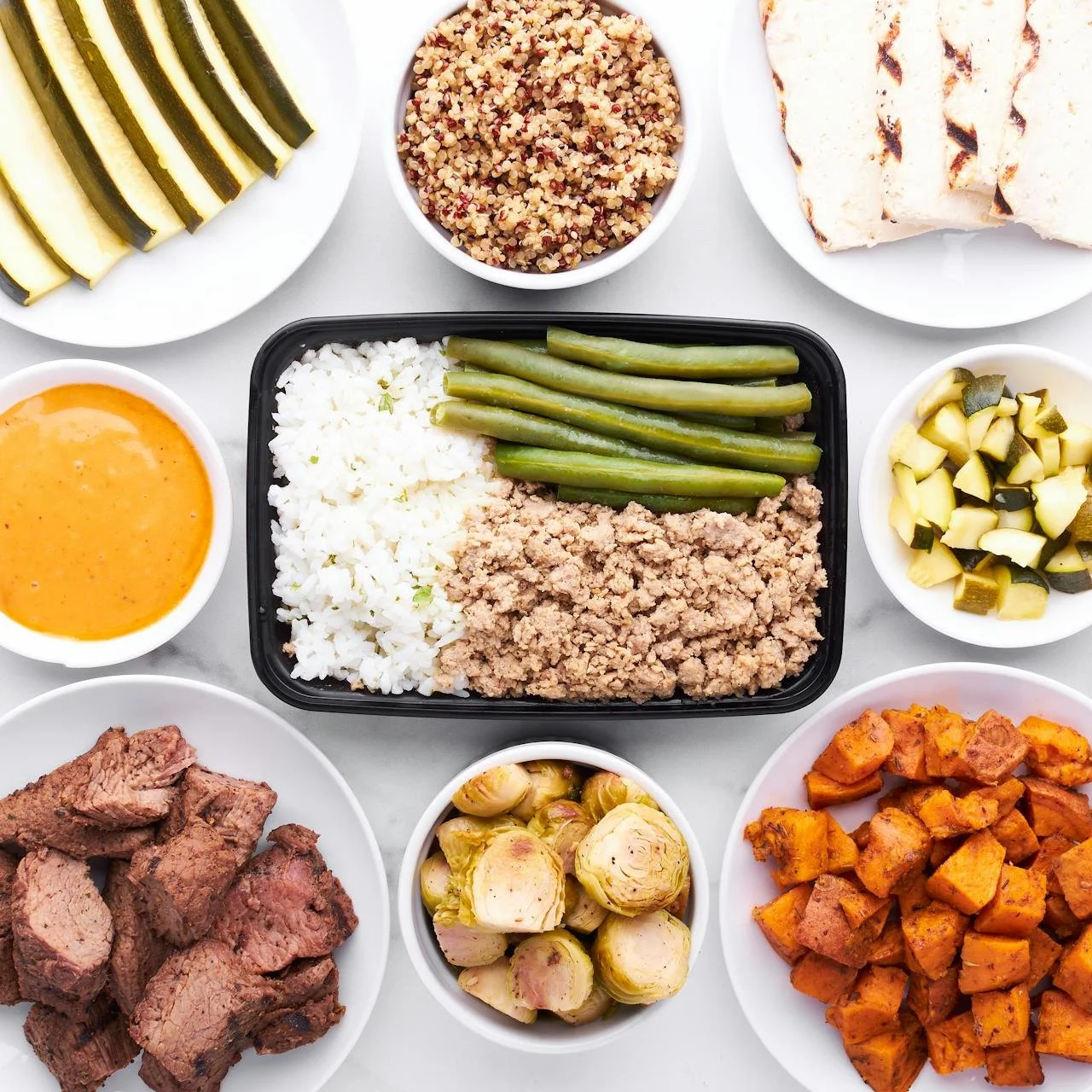
The part of a meal plan and workout plan that nobody talks about is the twenty minutes you spend staring into the refrigerator at 6pm after a full day, completely unwilling to make a decision. You have good intentions. You have the workout done. You have approximately zero bandwidth left for creativity in the kitchen. And so you order something, or you eat crackers over the sink, and then feel vaguely guilty about it until Thursday.
This is not a discipline problem. It is a prep problem. When food is ready, people eat it. When food requires decisions and effort at the end of an already long day, people don't. The gap between a nutrition approach that supports your training and one that quietly collapses by Wednesday is almost never about knowledge. You know what to eat. It's about having it ready when the decision-making part of your brain has already clocked out.
This post gives you a dead-simple bulk prep method built around two proteins and two carbohydrates, plus five ways to dress them up so the same base ingredients feel like actual variety instead of sad repetition. If your fitness and diet plan has been falling apart at the food execution stage, this is the fix. It takes about ninety minutes on a weekend and pays you back every single day of the week.
The Bulk Prep Foundation That Makes Everything Else Work
The goal of bulk prep is not to meal prep like a bodybuilder with twelve identical containers stacked in a fridge. That approach works for approximately four days before you resent every single one of those containers. The goal is to have cooked, neutral-flavored building blocks ready to go, so that assembly at mealtime takes five minutes instead of forty-five.
Two proteins cover almost everything you need for a week. Chicken thighs are the more forgiving option because they stay moist after reheating in a way that chicken breast simply does not. Season them with salt, pepper, garlic powder, and a little olive oil, then roast them at 400 degrees for about 35 minutes. They will keep in the refrigerator for four to five days and reheat in a pan or microwave without turning into rubber. Ground beef or turkey is the second protein, cooked simply in a pan with salt and onion powder and drained well. It takes twelve minutes and goes with practically everything.
For carbohydrates, white rice and potatoes are the most practical bulk options for a nutrition workout plan that needs to fuel actual training. White rice cooks in about 18 minutes, keeps for five days, and absorbs whatever flavor you add to it without fighting back. For potatoes, baby potatoes roasted with olive oil and salt at 425 degrees for 25 to 30 minutes give you something that reheats well and works equally well hot or cold. You do not need to do both every week. Pick the one your household will actually eat and commit to it.
The prep sequence that makes this efficient is to start the potatoes or rice first since they take the longest, get the chicken in the oven while the carbs cook, and brown the ground meat while everything else finishes. With a little overlap, the whole process takes 75 to 90 minutes and produces four to five days of building blocks that require zero thought at mealtime. That is the foundation of a body wellness approach that actually survives a real week.
Five Ways to Make the Same Ingredients Feel Like Different Meals
This is the part that keeps bulk prep from feeling like punishment. The base stays the same. What changes is the sauce, the seasoning, and the vegetables you pull from the refrigerator or a can. None of these options require cooking. They require assembly, which is a completely different ask at the end of a long day.
The first option is a rice bowl with whatever sauce is in your refrigerator door. Teriyaki, soy-ginger, sriracha mayo, or a simple mix of soy sauce and sesame oil over rice and chicken with a handful of shredded cabbage or frozen edamame that has been run under hot water. It takes four minutes and tastes intentional. The second option is a Greek-style plate with chicken, potatoes, cucumber, cherry tomatoes, olives, and feta with a drizzle of olive oil and lemon. No cooking required beyond pulling things out of the refrigerator.
The third option is a taco bowl using the ground meat with cumin and chili powder stirred in during reheating, served over rice with salsa, sour cream, shredded cheese, and whatever vegetables you have. The fourth is an Italian-style situation where you heat the ground meat with a spoonful of jarred marinara, serve it over potatoes or alongside roasted vegetables, and add parmesan on top. The fifth is the simplest of all: a loaded baked-potato-style bowl where you take the roasted baby potatoes, smash them slightly, and top them with ground meat, cheese, sour cream, green onions, and hot sauce. It looks like effort. It is not effort.
What makes this work for a real meal plan and workout plan is that none of these options require you to think very hard or feel very motivated. The decision is already made. The food is already cooked. You are just choosing a sauce and a topping and reheating two things.
How Food Prep Connects to Training Results
Here is the part most nutrition advice skips. What you eat around your training matters, but whether you eat at all, and how stressed the eating experience is, matters just as much. A fitness and diet plan that requires perfect execution every single day is a plan that will fail during your busiest weeks, which are the weeks when your body most needs consistent fuel.
Bulk prep removes the barrier between intention and action. When protein and carbohydrates are already cooked and sitting in your refrigerator, you eat them. When they are not, you improvise, and improvisation under fatigue and time pressure rarely looks like the nutrition that supports your training goals. The athletes and clients who make the most consistent progress are not the ones with the most sophisticated meal plans. They are the ones whose food is ready when they need it.
The other thing bulk prep does for body wellness is reduce the cognitive load of eating decisions. Every decision you make costs something. Deciding what to eat three times a day, when you are already depleted from a full day of work and training, drains resources that your body needs for recovery. When the decision is already made at the start of the week, that energy stays available for the things that actually require creative thought.
Post-workout nutrition specifically benefits from this approach. If you finish a training session and your food is already prepared, you eat within the window when your body is most ready to use it. If you finish a training session and have to figure out what to eat from scratch, that window often closes before the food is ready. That is a small thing that adds up significantly over weeks and months.
Making This Part of Your Actual Week Not Just a Good Intention
The most important thing about a bulk prep system is that it has to be repeatable in the version of your week that is not going well, not just the version where you have plenty of time and high motivation. If your prep routine only happens during good weeks, it is not a system. It is an occasional event.
Pick one day and one ninety-minute window and treat it like a non-negotiable appointment. Sunday afternoon works for most people because it creates a buffer before the week starts. If Sunday doesn't work, choose whatever day is consistently least chaotic. The specific day matters less than the consistency of the habit.
Keep the proteins and carbohydrates simple and rotate them slowly rather than trying something new every week. The variety comes from how you dress the food, not from the food itself. Trying to prep elaborate proteins or complicated grains adds decision fatigue back into the process at the preparation stage, which defeats the purpose.
If you want a meal plan and workout plan that accounts for both what you eat and how your training is structured, those two things do not have to be managed separately. I work with clients to build integrated approaches where nutrition supports training and recovery rather than existing as its own separate system to maintain. You can book a free consultation HERE and we will look at what your actual week looks like and what a sustainable nutrition approach inside of that week would need to include.
