

How the Neubie Machine Speeds Up Fitness Transformation
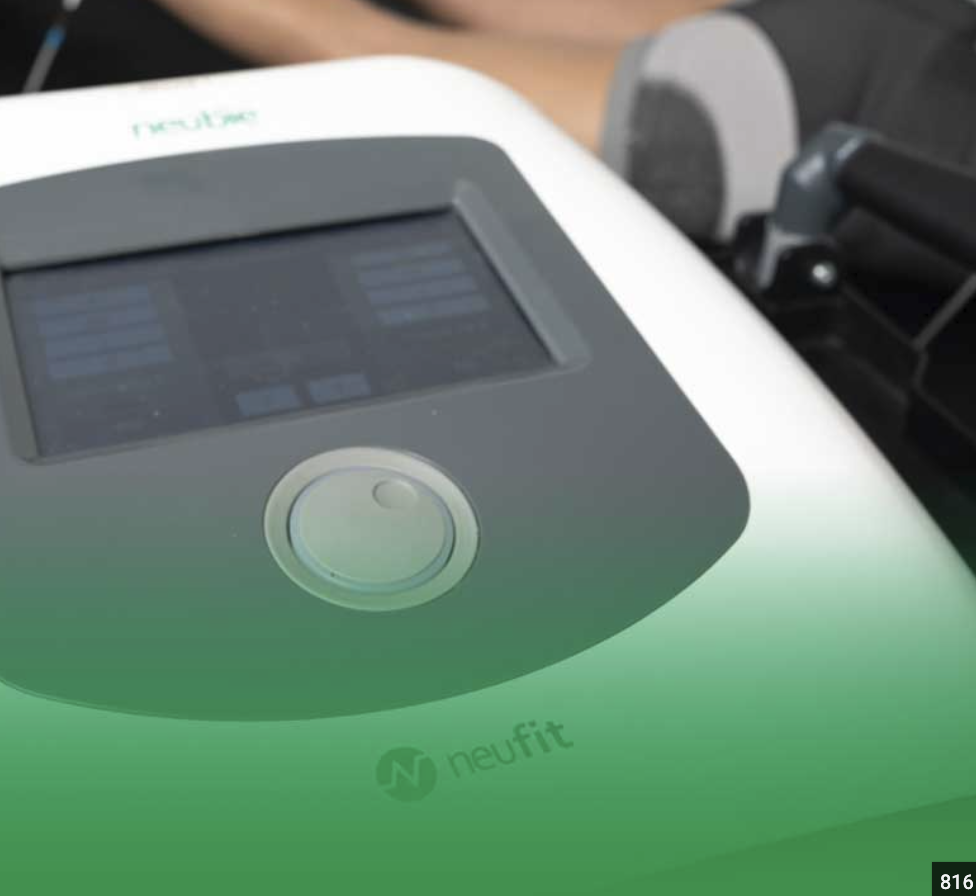
The Neubie works by delivering direct current electrical stimulation to retrain how your nervous system recruits muscle. Tiffany Mercer is certified to use it and integrates it into personal training sessions at Lion's Lair Pro Gym in Colorado Springs for clients who want faster recovery and better results.
Most people approach fitness transformation as a problem of effort and consistency. Show up enough, follow the right plan, do the work. And those things matter. But there is a layer that most training approaches never touch directly: what your nervous system is doing while you train, and whether the neurological signals that drive muscle recruitment are actually reaching the muscles you are trying to develop. When that layer is operating well, training produces results efficiently. When it is not, you can train hard and consistently and still feel like something is quietly blocking your progress.
The Neubie machine works at that layer. It is an FDA-cleared device by NeuFit that uses direct current electrical stimulation, rather than the alternating current most electrical stimulation devices use, to communicate with the nervous system in a way that produces neuromuscular effects that traditional training alone often cannot replicate. The technology is genuinely interesting, the emerging research behind it is compelling, and the results I see when I incorporate it into a personalized workout program are meaningful enough that I want to explain what it does and why.
This post covers what the Neubie is and how it works, the research on its relationship to muscle development and hypertrophy, and the piece that most training approaches miss entirely: why a dysregulated nervous system is one of the most significant and least discussed barriers to fitness transformation, and what addressing it actually looks like.
What the Neubie Machine Is and How It Works Differently
The Neubie gets its name from the phrase Neuro-Bio-Electric, which is an accurate description of what it does. It delivers pulsed direct current through electrode pads placed on the skin, and the use of direct current rather than alternating current is the key difference that sets it apart from other electrical stimulation devices.
Conventional alternating current electrical stimulation devices cycle the current direction repeatedly, which produces muscle contractions but also engages the protective co-contraction responses that the nervous system uses to guard against perceived instability. Direct current mimics the body's natural neurological signaling pattern more closely, which allows it to engage muscle fibers with less protective interference. The device uses an exponential wave pattern designed to mimic the natural neurological pattern to engage the force velocity of muscle fibers with minimized protective co-contraction of nearby muscle groups. clinicaltrials
In practice, one of the most useful features of the Neubie is its mapping process. A comprehensive body scan is used to precisely identify areas where the nervous system is creating limitations, mapping out where neurological signals are excessive, reduced, or creating guarding mechanisms that impede normal function. This gives a practitioner specific information about where the nervous system is protecting rather than activating, which informs how the device is applied and how a personalized workout program can be adjusted to address those gaps directly. NeuFit
The Neubie is FDA cleared for the following indications: maintaining or increasing range of motion, increasing local blood circulation, neuromuscular re-education, preventing atrophy, reducing spasms, preventing venous thrombosis after surgery, management or relief of chronic pain, and management of post-surgical and post-traumatic acute pain. Those clearances reflect what the research base currently supports, and the application in a fitness and performance context builds from that foundation. clinicaltrials
What the Research Shows About the Neubie and Hypertrophy
The most significant piece of published research on the Neubie and muscle development came from a peer-reviewed study led by Dr. Samuel Buckner at the University of South Florida, published in the Journal of Musculoskeletal and Neuronal Interactions. The study found that short-term training with the Neubie device results in similar responses as traditional high-load training in areas of increased muscle thickness, changes in torque, and soreness, but with lower perceived exertion. PR Newswire
That finding matters for a specific reason that goes beyond the device itself. The research aligns with a broader body of evidence suggesting that maximal muscle growth will occur in the presence of sufficient muscle activation and fatigue development, not necessarily in the presence of high external load. The Neubie's ability to drive that activation through the nervous system rather than through mechanical load opens up applications for people managing injuries, significant deconditioning, post-surgical recovery, or nervous system states where high-load strength training programs would be premature or counterproductive. Neupttech
The study results suggest that the effects of the Neubie are comparable to that of resistance training, with the caveat that further research is necessary to examine neuromuscular responses to Neubie training over longer periods. That is an honest framing of where the science is, and it is worth holding clearly: the acute responses are well-documented, and the long-term hypertrophy picture requires more research to fully characterize. What practitioners observe in clinical and coaching settings is consistently positive. The controlled research is catching up to that observation. Xtalks
For body wellness applications, the Neubie also addresses something strength training programs alone frequently miss: the muscles that have been neurologically turned down or switched off entirely due to guarding, injury history, or chronic tension patterns. Building strength in a system that has compensations running underneath produces limited results, because the compensations stay in place and limit how much the targeted muscles can actually contribute. The Neubie gives a path to address those patterns directly.
Why a Dysregulated Nervous System Makes Fitness Transformation So Hard
This is the section most training programs were never built to address, and it is one of the most important pieces of the picture for anyone who has been working consistently without results that match the effort.
Your nervous system governs every aspect of your body's capacity to change. When it is operating in a regulated state, the body allocates resources toward adaptation, repair, and growth. When it is chronically dysregulated, the body stays in a resource-conservation mode that actively works against the changes you are trying to create. A nervous system stuck in sympathetic overdrive keeps the body in a constant state of stress, which leads to elevated cortisol levels that can increase appetite, promote fat storage especially around the midsection, and make it difficult to build lean muscle mass. Acacianaturalmedicine
Cortisol has direct catabolic effects: it activates proteolysis, which breaks down muscle protein for glucose, reduces mTOR signaling, which impairs the primary pathway for muscle protein synthesis, and lowers testosterone through chronic elevation that suppresses gonadotropin-releasing hormone. This creates a situation where elevated stress simultaneously promotes fat storage and breaks down the muscle you are trying to build. Training harder into that state does not solve the problem. It adds training stress to a nervous system that is already overwhelmed and compounds the cortisol load further. BodyRecomp
When the nervous system stays dysregulated for too long, metabolism begins to shut down parts of the system to protect you. Cortisol stays high and metabolic rate drops. When the body thinks it is constantly under pressure, it keeps producing cortisol, which dampens thyroid activity, particularly the conversion of T4 to T3, the hormone that sets the metabolic idle speed. The result is a body that burns fewer calories at rest, stores fat more readily, builds muscle less efficiently, and recovers more slowly from every training session. These are not separate problems with separate solutions. They are the downstream effects of one central issue: the nervous system does not feel safe enough to invest in growth. FIT4IT
This is where the Neubie's nervous system regulation application becomes directly relevant to fitness transformation. By addressing the neurological guarding patterns, chronic tension, and areas of reduced activation that a dysregulated nervous system creates, the device supports the conditions under which adaptation can actually happen. Combined with a personalized workout program and a genuine approach to recovery, stress management, and adequate fueling, it addresses the layer that most training plans were simply not built to reach.
What This Means for Your Fitness Transformation
A fitness transformation that stalls despite consistent effort is almost never a motivation problem. It is usually a systemic one. The training stimulus is present, but something in the environment, whether that is nervous system dysregulation, chronic stress, inadequate recovery, or neurological patterns that are limiting muscle recruitment, is preventing the body from completing the adaptation the training is asking for.
Addressing all of those layers together, through a personalized workout program that accounts for nervous system state, appropriate training load, recovery, and tools like the Neubie where they are relevant, produces results that individual components applied separately cannot match. The body is a system. It responds to inputs across that whole system, not to any single variable optimized in isolation.
If you want to explore what this approach looks like in practice and whether it fits where you are right now, I would love to talk. You can reach out at tiffanymercer.com/contact for a free conversation with no pressure and no obligation.
