

Personal Training Plan vs Fitness Influencer Programs
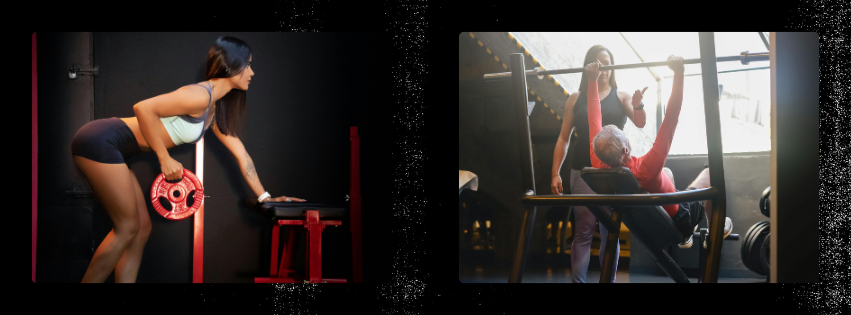
Personal training looks different for every person who walks in. One client is building baseline strength. Another is pushing past a plateau. Tiffany Mercer meets each one where they are and builds a custom workout program from there.
There is more fitness content available right now than at any point in human history. Workout programs, exercise reels, transformation before-and-afters, and influencers with millions of followers demonstrating moves in perfectly lit studios. And yet the number of people who feel stuck, confused, and quietly convinced that something is wrong with them for not getting results from the programs they have tried keeps growing. That is not a coincidence. It is a design problem.
A fitness influencer and a personal trainer are not the same thing. They are not interchangeable depending on your budget. They solve fundamentally different problems, and using the wrong one for where your body actually is right now is one of the most common and most expensive mistakes people make on the way to the results they want. A personal training plan built specifically around your body, your limitations, your history, and your life is a categorically different product from a standardized program, no matter how good the influencer is at making it look achievable.
This post breaks down exactly what each one offers, where each one genuinely serves you, and how to figure out which one your situation actually calls for. If you have purchased programs that did not work and walked away wondering what was wrong with you, this post is for you specifically.
What a Fitness Influencer Actually Is and Is Not
Fitness influencers are often genuinely talented at what they do. Many of them demonstrate exercises with excellent form. Many of them are inspiring to watch, consistently motivating, and good at making movement feel accessible and even fun. These are real contributions, and there is nothing wrong with following someone for that value. The problem is not what fitness influencers offer. The problem is the gap between what they offer and what gets marketed.
Here is something most people do not know. The majority of fitness influencers do not write their own programs. They perform programs written for them by personal trainers and coaches behind the scenes. Their job is to demonstrate, inspire, and build an audience. Their expertise is in performing fitness and creating content about it, not in the science of program design, biomechanics, or the psychology of sustainable behavior change. Those are different skills entirely, and they require different training and experience to develop.
A fitness influencer also has experience working with exactly one body: their own. Often that body is young, has a background in athletics or dance, and has spent years being trained by professionals. The program they are selling was built for a body like theirs, in a context like theirs, at a stage of fitness development like theirs. If your body, your history, your limitations, and your life match that profile closely, the program has a reasonable chance of working. If they do not, you are not failing the program. The program was never designed for you in the first place.
Influencers can be a genuinely useful part of your fitness ecosystem. For form demonstrations, for movement ideas, for motivation and inspiration, they can add real value. Where they cannot deliver is in understanding your specific body, modifying for your specific limitations, or adapting to you as your life and your capacity change.
What a Personal Training Plan Actually Includes
A personal trainer is someone who has gone through formal education, whether a degree in exercise science, kinesiology, or a nationally accredited certification, that covers human anatomy, biomechanics, physiology, program design, and the science of how different bodies respond to different training stimuli. That education matters because human bodies are not uniform. Age, hormonal state, injury history, metabolic health, movement patterns, and psychology all influence how a person responds to training, and understanding those variables is what allows a trainer to actually get someone results rather than just give them something to do.
The most important thing a personal training plan provides that a standardized program cannot is progressive adaptation. A well-designed program meets your body where it currently is, including its limitations, its compensations, its current capacity, and builds from that specific starting point in a sequence that makes sense for your biology. As your body adapts, the program adapts with it. The load progresses. The complexity increases. The focus shifts as earlier goals are achieved and new ones become relevant. This is the mechanism through which real, lasting change happens, and it requires someone who is watching your body respond and adjusting accordingly.
Custom workout programs built by a personal trainer also account for the psychology of change in a way that standardized programs simply cannot. Different people move through change differently. Some need more accountability structure. Some need more autonomy. Some need the program to flex significantly during high-stress seasons of life. A trainer who understands the psychology of transformation knows how to coach the person in front of them, not just the program they designed, and that distinction is often the difference between someone who sustains their results and someone who restarts the same cycle every few months.
Why Standardized Programs Feel Like Personal Failure
This is the part I want you to hear clearly. If you have purchased a fitness influencer's program and it did not produce the results it promised, you did not fail. The program failed to fit you, which is a completely different thing.
Standardized programs are built around an assumed body. They assume a starting fitness level, a certain range of mobility, a certain recovery capacity, a certain schedule flexibility, and a certain response to the training style used. When your body falls outside those assumptions, even slightly, the program starts to break down. The progressions feel too fast or too slow. The movements aggravate something that was never accounted for. Life shows up in a way the program cannot accommodate, and there is no mechanism for adaptation because adaptation requires a person, not a PDF.
The people who do well with standardized programs are typically already well-versed in fitness, know their bodies with real precision, and are looking for structured variety rather than foundational guidance. For them, following a program makes complete sense. But if you have struggled to get the results you want despite consistent effort, if you feel like you keep starting over, if you have a nagging sense that something is missing in your approach, the answer is almost never a better program to follow. The answer is a professional who can identify what your specific body actually needs and build a personalized workout program around that, starting in the right place rather than a generic one.
How to Know Which One Your Situation Actually Calls For
The honest answer is that it depends on where you are and what you need, and most people undersell how much they actually need a real professional rather than a better program to follow.
If you are already knowledgeable about your body, have a solid training history, move without significant limitations or chronic issues, and are simply looking for structure and variety in your workouts, a well-designed program from a credible source can serve you well. Use it with the fitness influencer content for motivation and form reference. That combination can work.
If you have struggled to get results despite genuine effort, if you have injuries or limitations that require modification, if your body has changed significantly due to age, hormones, stress, or health shifts, or if you have purchased programs before and walked away feeling like something was fundamentally wrong with you, a personal training plan is the right next step. Not because you need to be fixed, but because your body deserves someone who can actually see it, understand it, and build something around it specifically.
Did you know that the time and money spent cycling through program after program that was never designed for your body could be redirected into one relationship with a professional who can actually find the missing pieces? That is not a pitch. It is a math problem worth doing honestly.
If you are ready to stop guessing and start working with someone who will build around you rather than hoping you fit the mold, head to tiffanymercer.com/contact for a free consultation. No pressure, no obligation. I will do my best to understand where you are, answer your questions honestly, and point you toward whatever the right next step actually is, whether that is working together or simply leaving with more clarity than you came with.
