

What Five Years With an Online Personal Trainer Can Do
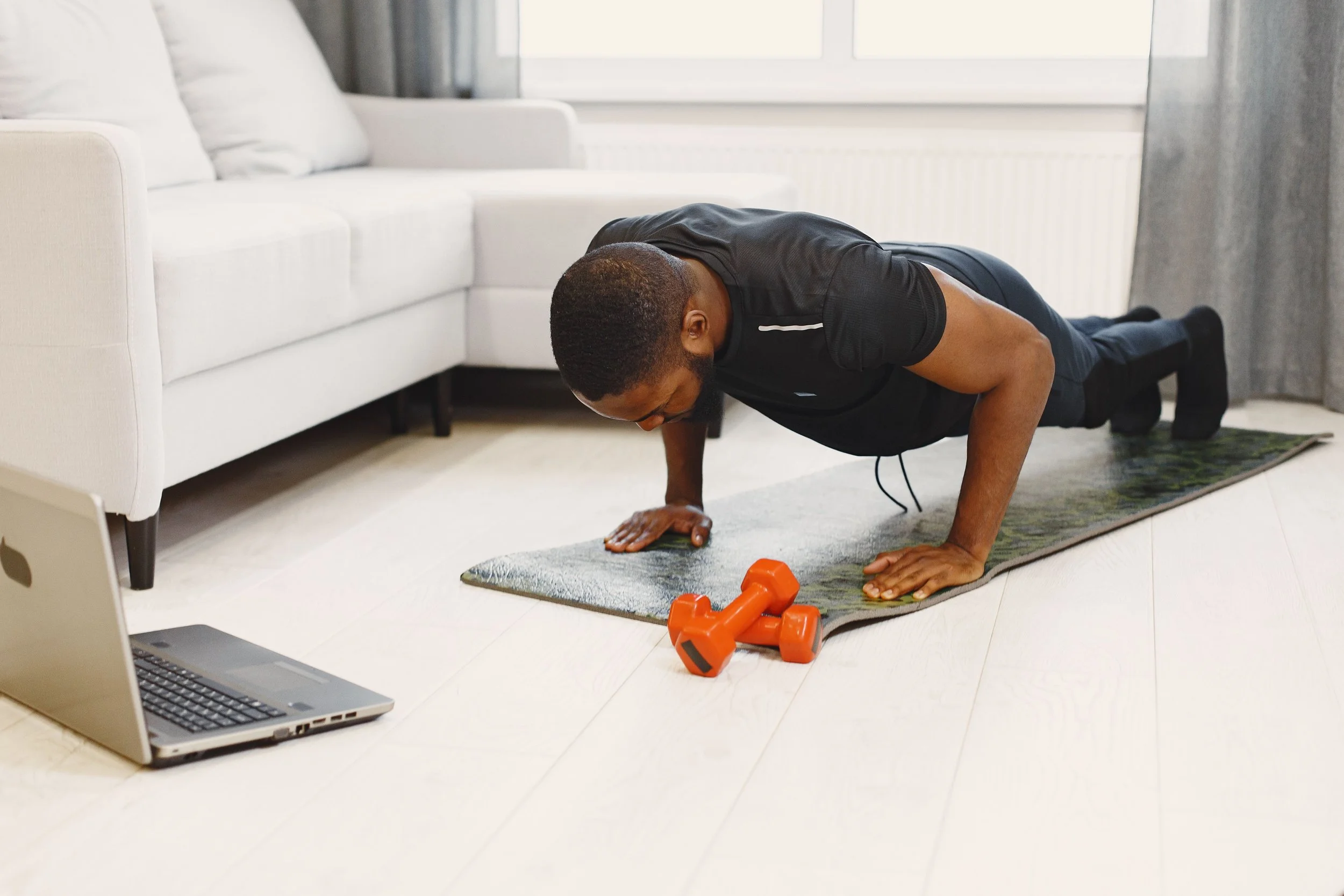
Online personal training works because the coaching travels with you. A mat, a set of dumbbells, and a program built around your schedule is enough to produce real results. Tiffany Mercer delivers the same standard of attention whether you are in a gym or your living room.
He called because he wanted an in-person trainer. When he realized the call was about online training instead, he told me plainly that it was not for him. I told him that was completely fine, and asked if he would be willing to try a single session anyway, just so he could speak to it if anyone in his life ever asked. He agreed. After that session, he said it was the best personal training session he had ever had. He signed on the same day.
That was five years ago. Since then, he has gotten off medications, beaten valley fever, raised his VO2 max by over twenty points, snowboards with his kids again, hiked one hundred miles across Spain, healed chronic pain that had been with him for years, and built more capacity to be present with his family than he has had in a long time. Working with an online personal trainer did not just change how he moves. It changed what his life is able to hold.
This post is about how that happened, what online training actually makes possible, and who it is built for. If you have ever assumed that video training is a lesser version of the real thing, his story is worth reading.
What an Online Personal Trainer Can Actually Offer
The most common assumption about online personal training is that something is missing compared to working with a trainer in person. The reality is that very little is missing and some things are actually better, depending on how the work is structured.
When we train together via video session, I can see your movement, assess your form, watch how your body responds in real time, and coach you through adjustments the same way I would if we were in the same room. I can also do something an in-person trainer often cannot: meet you wherever you are. At home between meetings. In a hotel room on a Tuesday morning before a full day of travel. In a quiet space that works for your nervous system rather than a loud gym that does not. For clients managing unpredictable schedules, the flexibility alone changes what consistency is even possible.
A personalized workout program delivered this way is built around exactly what you have available, whether that is a full home gym, a set of bands and a pair of dumbbells, a pull-up bar in a doorway, or just your bodyweight and about a yoga mat's worth of floor space. The program is built for you specifically, not adapted from a template. I do not build a single exercise or sequence until we have talked and I understand what your body needs, what your history is, and what your life actually looks like. The training follows you, not the other way around.
This approach also means that a session does not have to be a workout. It can be an active recovery session, a nervous system reset, or a nutrition coaching conversation, depending on what you actually need that day. Body wellness built this way is responsive to what is happening rather than rigidly attached to a plan that was built for a different version of your week.
The Client Who Said No and What Happened Next
After his first session, we did an assessment workout. From there I designed his custom training plan from scratch, built entirely around his history, his goals, and what his body was ready for at that stage.
A few weeks in, during a session, I noticed something. His heart rate was not recovering between sets the way I expected it to. He was ready to keep going, he had more in him and did not want to waste the time. I told him we were done for the day and asked him to see his doctor as soon as he could.
Less than a week later, he had a heart attack and had seven stents placed. His doctor told him that having a trainer who noticed the symptoms and slowed him down rather than pushing him harder had likely made a significant difference in the outcome. He could not return to his normal training after open heart surgery. So we did not try to.
We started with breathwork. Something as simple as a slow, intentional breath was genuinely taxing at that stage, and we stayed there until it was not. From there we moved into deep core activation, rebuilding his foundation from the inside out in a sequence that his body was actually ready to absorb. We discovered food sensitivities along the way and built a way of eating that supported his system rather than working against it. His sleep improved. His mood improved. His digestion, focus, and blood markers all moved in the right direction. Every goal he hit, he got excited to set the next one.
Over the five years since, we have adjusted the work as his body has been ready. He is off medications he had been on for years. His VO2 max is over twenty points higher than when we started. He snowboards with his kids and hiked one hundred miles in Spain. The chronic pain that had been part of his daily life is gone. He manages stress at work with more capacity than he had before, and he is more present with his family in the everyday moments and the big ones.
I have never met him in person.
Who Online Training Is Actually Built For
This structure works best for people whose lives require genuine flexibility. Executives and founders whose schedules shift without warning. Professionals who travel frequently and cannot build a consistent routine around a fixed gym location. Military and elite athletes who need a trainer who can adapt to changing conditions rather than defaulting to a fixed program. Parents managing unpredictable home schedules who need sessions that can move without the whole plan falling apart.
It also works particularly well for people who are overstimulated by loud, busy gym environments. If you think better in a quieter space, if you train better when you control the music and the pace and the environment, a session built in your own space can produce better results than one built in a room that taxes your nervous system before the first set begins. This is not a workaround. It is a legitimate performance advantage for a significant number of people.
The space requirement is minimal: roughly a yoga mat plus about a foot on each side. Equipment is built around what you already have or what makes sense to add for your goals. Most clients train with a set of bands, a few dumbbells, and sometimes a pull-up bar. Calisthenics-only sessions are also fully viable and genuinely demanding when they are programmed with intention.
Sessions are available up to five times per week, and the format varies based on what each session calls for. If the most useful thing that week is a nervous system reset rather than a strength session, that is what we do.
What Getting Started Actually Looks Like
I do not take on clients without being confident it is the right fit, and I do not want you to commit to something without knowing what you are getting. If you have questions, a trial session is always available. You come through exactly the experience you would have as a real client, so you can make a real decision.
The program that follows is built from scratch, built around your history, your goals, your lifestyle, and what your body actually needs right now. There are no templates. There is no box to fit you into. There is a conversation, an honest assessment, and then a plan that was made for you specifically.
If any of what he experienced, the flexibility, the responsiveness, the program that followed his body instead of demanding he follow a fixed plan, sounds like what you have been looking for, I would love to hear from you. Apply to work with me at https://tiffanymercer.com/apply and we will start with a real conversation about what you need and whether this is the right fit.
