

Why an Online Personal Trainer Beats Random Workouts
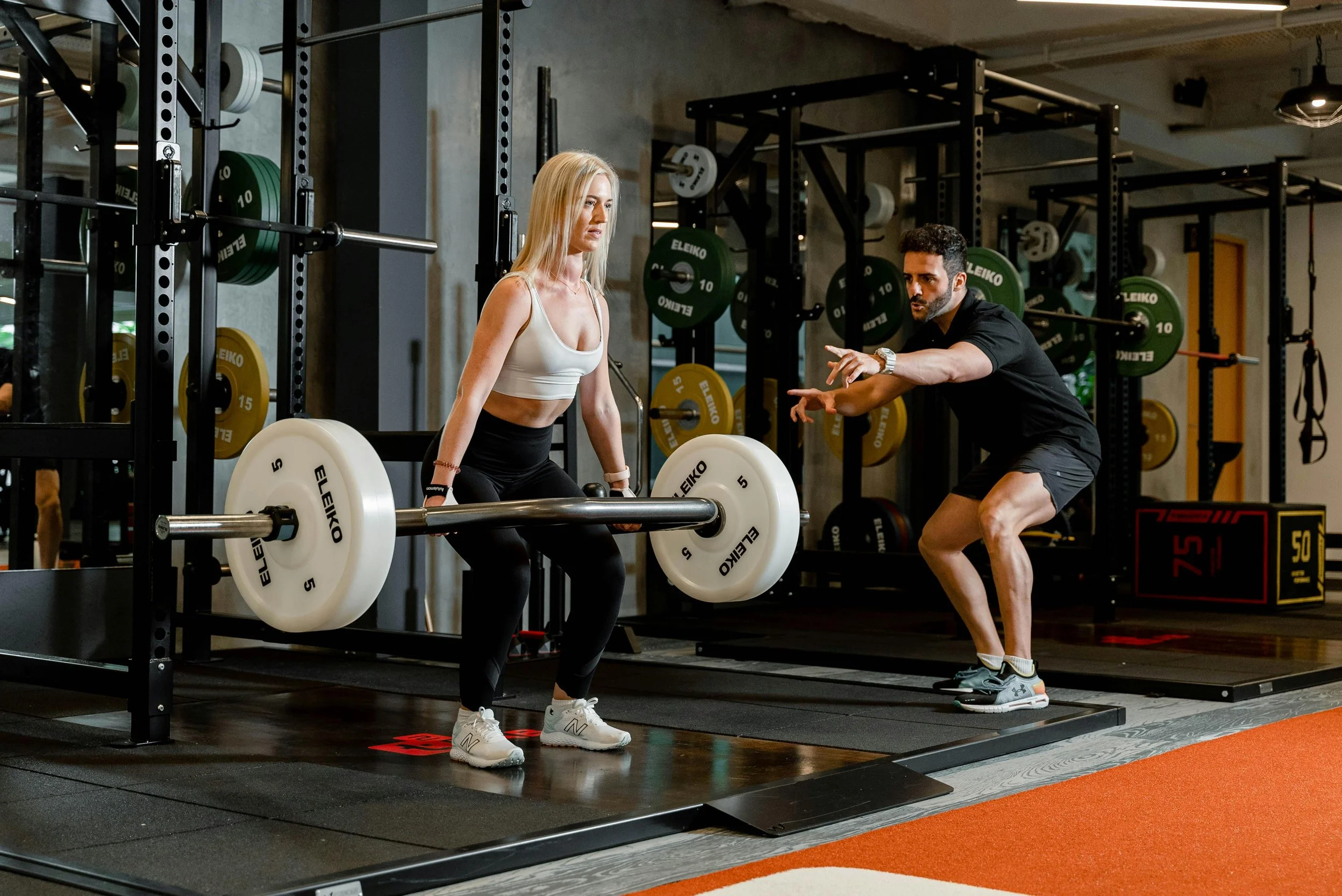
Good coaching is not just about counting reps. It is about knowing exactly when to cue, when to push, and when to back off. Tiffany Mercer brings that same level of technical attention to every client, whether you are in the same room or working together online.
There is a version of fitness that looks like effort from the outside and produces very little from the inside. You show up to the group class. You follow the workout you found online. You do the exercises you remember from the last program you tried. You sweat, you finish, you feel temporarily accomplished, and then six months later you are roughly where you started, wondering why consistent effort is not adding up to consistent results. The answer is almost never that you did not work hard enough. It is that the work was not organized in a way your body could actually build on.
An online personal trainer who builds progressive, personalized programming is solving a completely different problem than a group class or a random exercise selection. The class is designed for a room full of different people with different bodies, different histories, and different goals. The random exercises are designed for no one in particular. Neither one has a mechanism for knowing where you are, tracking how you respond, or adjusting what comes next based on what actually happened. Without that mechanism, you can be extremely consistent and still not get anywhere, because consistency alone is not the variable that drives results. Progressive, specific stimulus applied to your particular body over time is.
This post breaks down exactly why progressive personalized programming produces results that group classes and random workouts cannot match, what the difference looks like in practice, and what to look for in an online personal trainer who builds programs that actually evolve with you.
Why Random Exercise Selection Does Not Build Lasting Results
The fitness content available right now is essentially infinite. Workouts on YouTube, exercise reels on Instagram, programs from influencers, apps with hundreds of movement options. None of it is necessarily wrong. Most of it is genuinely fine as a collection of exercises. What it almost never is, is organized in a way that produces compounding progress for a specific individual.
Your body adapts to what it receives repeatedly and progressively. That is the mechanism. When you do a workout once, your body experiences it as a novel stimulus and responds accordingly. When you repeat that same workout without progression, your body adapts to it and stops changing. When you rotate through random workouts without a clear structure connecting them, your body never accumulates enough consistent stimulus in any direction to produce meaningful adaptation. You are always starting over rather than building forward.
This is one of the most common reasons high performers plateau despite consistent effort. They are working hard but the work is not organized into a sequence that tells their body what to build toward. A workout is not a training plan. A collection of good exercises is not a program. What produces results is a carefully sequenced series of sessions where each one builds on the last, the load progresses appropriately, and the movements were selected specifically for what this body needs rather than what a general audience can tolerate.
Did you know that the difference between someone who sees dramatic results from twelve weeks of training and someone who sees modest results from the same twelve weeks is almost never talent, genetics, or effort level? It is usually program design. The right stimulus applied in the right sequence to the right body produces change. Everything else is just movement.
What Group Classes Can and Cannot Do for Your Fitness Goals
Group classes are genuinely valuable for certain things. The energy of training alongside other people is real and motivating. The instructor cueing movement quality in real time is useful. The consistency of a scheduled commitment helps a lot of people show up when they might otherwise talk themselves out of it. These are legitimate contributions and worth acknowledging.
Where group classes structurally cannot deliver is in progression designed for your body specifically. A class has to be accessible to everyone in the room, which means it is calibrated for the middle of the group. If you are above that middle, you are under-stimulated and adapting slowly. If you are below it, you are over-stimulated and at higher injury risk. If you have a specific limitation, an old injury, a movement pattern that needs correction, a hormonal or metabolic factor that affects how you respond to training stress, the class has no mechanism to account for any of it.
The other structural limitation is that group classes almost never progress in the way individual programming does. The Tuesday spin class this week is essentially the Tuesday spin class from six months ago. The intensity might vary, the instructor might change the playlist, but the fundamental stimulus is the same. Your body adapted to it months ago and is no longer changing in response to it. You are maintaining, not building, and for someone with specific fitness goals that distinction matters significantly.
A custom training plan tracks where you are and builds from there. It increases load when you are ready, pulls back when your recovery capacity requires it, and changes the stimulus before your body fully adapts so that progress continues rather than plateauing. That sequencing is what group classes are structurally incapable of providing, not because they are poorly designed but because they were not designed for you.
What Progressive Personalized Programming Actually Looks Like
Progressive programming is not complicated in concept but it requires consistent attention to execute well. The foundation is simple: your body needs a stimulus that is slightly more demanding than what it has already adapted to, applied consistently enough to produce adaptation, with adequate recovery built in so the adaptation can actually complete.
In practice this means the program tracks what you did last week and builds from it. The load increases when your form is clean and your recovery is adequate. The volume builds gradually over a training block rather than jumping randomly between high and low demands. The exercise selection stays stable long enough for you to actually get better at the movements, which matters because skill in movement is part of what allows progressive loading to produce results rather than just producing soreness.
A personalized workout program also adjusts based on what is actually happening in your life. When your stress load is high, the training adapts to preserve the habit and protect recovery rather than pushing load forward into a system that cannot absorb it. When you have a high capacity period, the programming takes advantage of it. This kind of responsive adjustment is what makes the difference between a program that compounds over six months and one that collapses under the first difficult week.
Working with an online personal trainer who manages this process means you do not have to track all of it yourself or make judgment calls about progression under fatigue. The program already knows what comes next because it was built with that sequencing in mind from the start. Your job is to show up and execute. The design work has already been done.
What to Look for in an Online Personal Trainer Who Programs This Way
Not every online personal trainer builds programs with genuine progression and personalization. Some deliver templated programs with your name on them and call it custom. Some build a solid initial program and never adjust it as you change. Some focus on exercise demonstration without the deeper understanding of how your specific body responds to training stress over time.
The questions worth asking before committing to working with anyone are direct. How do you track my progress and adjust the program over time? What happens to my programming when life gets demanding and my recovery capacity drops? How do you account for my injury history and current limitations in the exercise selection? How do you know when to progress the load and when to hold it steady? The answers to those questions will tell you quickly whether you are looking at genuine personalization or a well-marketed template.
If you have been working hard without getting the results your effort deserves, the missing piece is almost certainly not more effort. It is a program that was actually built for your body, that tracks how you respond, and that progresses in a way your nervous system and your schedule can absorb. That is what I build with every client I work with. Head to tiffanymercer.com/contact for a free consultation with no pressure and no obligation. We will look honestly at what you have tried, what your body needs, and what a program built specifically around you would look like.
