

Personalized Workout Plan for Hip Mobility After Travel
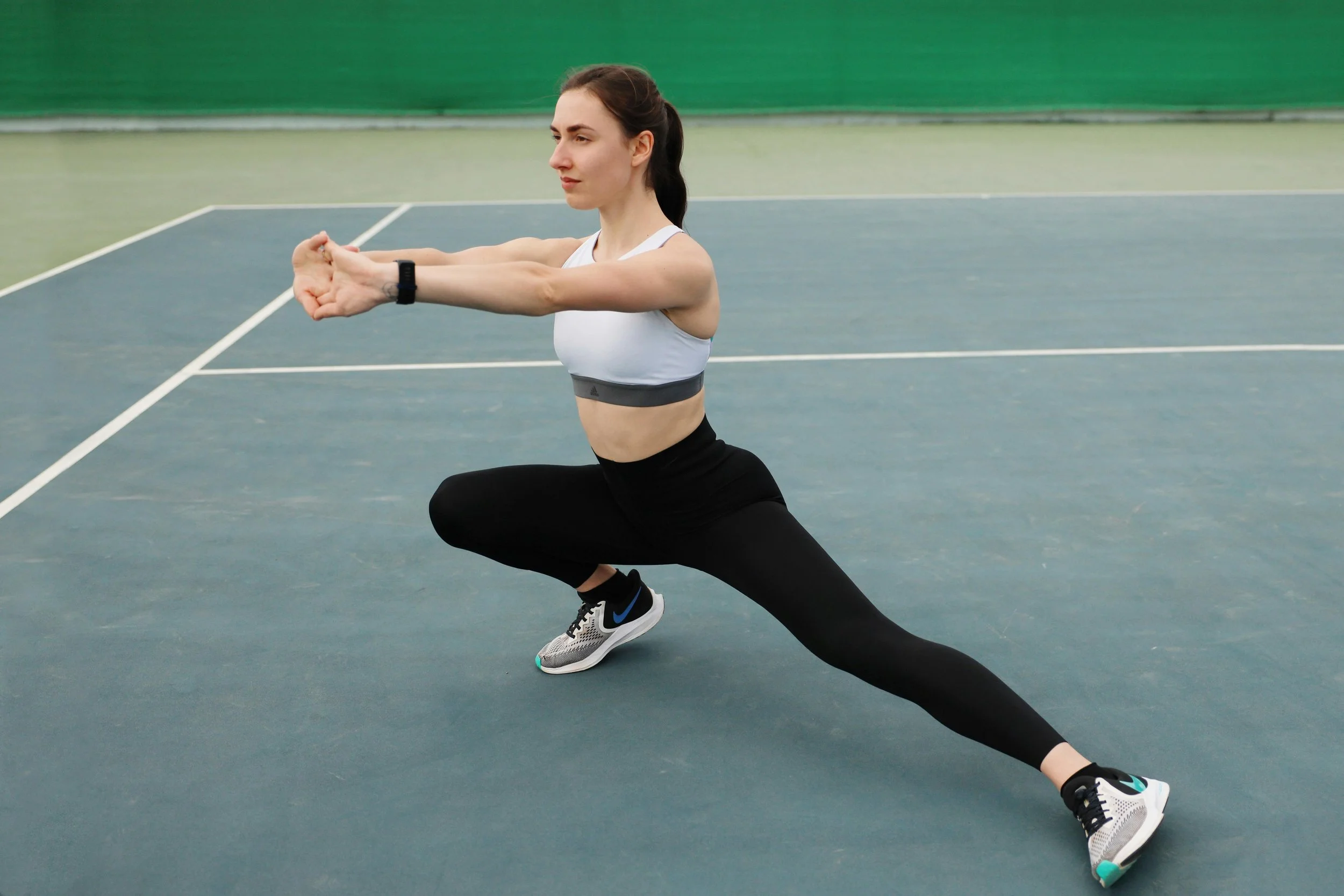
This image illustrates pelvic floor and breath coordination during hip mobility training, supporting body wellness, strength balance, and sustainable movement patterns for high performers.
If your hips feel locked up after a long flight, a heavy workweek, or a demanding training block, the instinct is usually to stretch more aggressively and hope the stiffness clears. Sometimes it does, briefly. Then the next travel week arrives, and you are back to the same morning negotiation with your own body. A personalized workout plan built around how your nervous system actually responds to stress and sustained sitting is what breaks that cycle, because the issue is rarely a flexibility deficit.
High-achieving women are especially susceptible to this pattern because they apply the same override strategy to the body that works everywhere else in their life. Push harder, stay the course, ignore the discomfort until the meeting ends. The body does not run on that logic. When your nervous system interprets sustained compression, erratic breathing, and high cognitive load as a safety threat, it responds by locking the hips down tighter. That protective grip is not something you can stretch your way out of, because the grip itself is the nervous system doing its job.
This post covers the actual mechanism behind travel-related hip restriction, a self-check you can run anywhere to identify what is happening in your system, one foundational cue that improves hip movement immediately by restoring breath and pelvic floor coordination, and what a personalized workout plan looks like when it accounts for your real movement patterns instead of a generic template.
Why Hip Tightness After Travel Is a Nervous System Issue
The hip joint sits at the center of nearly everything your body does under load. Walking, lifting, climbing stairs, sitting down and standing up, all of it runs through the hip. When that joint loses range or feels inconsistent between one day and the next, the assumption is usually that the surrounding muscles are tight. That is often true. The more important question is why those muscles are holding tension, and the answer usually starts well above the hip.
Your pelvis, diaphragm, and nervous system operate as a coordinated pressure management system. Under normal conditions, your breath moves in three dimensions, your pelvic floor responds in sync, and intra-abdominal pressure stays well-distributed through the trunk. When that coordination breaks down, the body improvises. The hips take on extra stabilizing work that they were not designed to carry alone, and the result is the kind of deep, diffuse tightness that does not respond to stretching because you are not dealing with a shortened muscle. You are dealing with a protective bracing strategy.
Travel accelerates this breakdown reliably. Hours of sustained sitting compresses the hips and shifts the pelvis into a position that reduces the diaphragm's ability to move freely. Disrupted sleep, dehydration, and the background stress of airports and schedules compound the nervous system's threat assessment. By the time you land and try to train, your body is operating in a mode that prioritizes defense over mobility, and no amount of foam rolling changes the underlying signal.
Body wellness at this level of demand requires more than recovery tools applied after the fact. It requires a training approach that addresses the coordination deficit directly and builds enough resilience in the system that travel and high-stress periods produce less disruption over time.
A Quick Self-Check for Breath and Pelvic Floor Coordination
Before adjusting anything in your training, it helps to understand what is actually happening in your system right now. This check takes less than two minutes and can be done anywhere, including a hotel room or an office with a door.
Stand with your feet roughly hip-width apart and place one hand on your lower ribs and one hand low on your abdomen, just above the pelvis. Take a slow inhale through your nose and notice what moves. If your breath travels upward into your chest and your shoulders rise, your diaphragm is not moving through its full range. If your lower hand stays still and only your upper chest expands, the pressure management system is already working with limited resources.
On the exhale, notice whether your abdomen has any elastic recoil or whether everything stays braced and rigid. A nervous system that is running a sustained protection strategy tends to keep the trunk locked throughout the breath cycle, which means the pelvic floor never gets a chance to lengthen and the hips never fully decompress between reps or steps.
Now shift your weight slightly into a shallow squat position and notice whether your hips feel free to move or whether there is an immediate sense of guarding or restriction at the bottom. If the movement feels unstable or your weight shifts unevenly, your body is missing the coordinated support it needs to feel safe in that range. This is information, not failure. Strength balance starts with knowing where the gaps are, and this check surfaces them in about ninety seconds.
The Breath Cue That Restores Hip Freedom Without Extra Stretching
Once you know the coordination pattern is off, there is one cue that produces immediate improvement for most people without adding a single new exercise to the session. It works because it addresses the pressure management problem directly rather than chasing the symptom at the hip.
On your inhale, picture your lower ribs expanding sideways and slightly downward, like a barrel widening in all directions rather than lifting toward your chin. At the same time, imagine the pelvic floor gently responding the way a trampoline responds to weight, not collapsing, not bracing, just giving slightly as the pressure increases. On your exhale, picture the ribs settling back down over the pelvis with a quiet engagement, like a slow recoil rather than a forceful crunch.
Repeat the shallow squat with that rhythm running in the background. Most people feel a measurable difference in hip freedom within two or three repetitions. The range does not open because the muscles suddenly relaxed on command. It opens because the pressure distribution improved enough that the nervous system stopped recruiting the hips for a stabilizing job they were doing by default.
Layering this cue into strength work over time builds the kind of durability that survives travel weeks and high-demand quarters. When your body can manage internal pressure efficiently across a range of positions and loads, the hips stay available for movement rather than defaulting to the protective grip. This is what a wellness workout plan looks like when it is designed around how the body actually organizes itself under stress, rather than how a training manual assumes it should.
What a Personalized Workout Plan Looks Like After Travel
Returning to training after a travel week or a high-cognitive-load period is where most generic programs create problems. They apply the same structure regardless of context, which means the session that was planned for a rested, well-recovered body gets delivered to a nervous system that has been managing compressive stress for four days. The body does not perform well. The person feels frustrated. The plan gets blamed, or they do.
A personalized workout plan adjusts inputs based on what is actually present. After significant travel or sustained mental load, that typically means a shorter session with more attention to quality of movement than volume of work, more emphasis on the coordination cues before loading the hip patterns, and a lower intensity ceiling that preserves the strength work without stacking training stress on top of an already taxed system. This is not softness. It is precision, and it produces better outcomes over a twelve-week block than the alternative.
The other element that separates a personalized approach from a generic one is how the plan evolves. As pelvic floor and breath coordination improve, the training stimulus can increase in ways that the body is ready to absorb. Mobility stops feeling fragile and starts feeling reliable. Strength balance develops not just within a session but across the demands of a real schedule that includes travel, deadlines, and irregular recovery windows.
If your current plan does not account for these variables, you are likely spending more energy managing the gaps than building on your actual progress. I work with clients to build personalized workout plans that integrate breath mechanics, hip coordination, and progressive strength into one system that holds up under real-life conditions. You can book a free consultation at tiffanymercer.com to start with an honest assessment of where you are and what a smarter approach would look like for your specific demands.
